


When the United Nations marked 2025 as the International Year of Quantum Science and Technology, it was not a symbolic gesture or futuristic prediction. Rather, it acknowledged that quantum breakthroughs are accelerating so quickly that policymakers, companies and developers alike are being forced to confront yet another technological revolution.
Just three years on from the massification of artificial intelligence (AI) through OpenAI’s 2022 launch of ChatGPT, research by Mckinsey confirms that the quantum market will reach up to $97 billion USD in revenue by 2035. And, by 2040, the industry will reach a $198 billion USD valuation.
Quantum firms have turned to heavy fundraising, with Maryland-based IonQ securing $1 billion USD in equity offering in July, and later raising $2B from Susquehanna’s Heights in October. Others, including Finnish IQM Quantum Computers, secured €275M in venture capital in September.
IonQ also acquired UK-based Oxford Ionics, Lightsynq Technologies and took a controlling stake in Swiss firm ID Quantique, which specializes in quantum-safe cryptography.
Across the board, more stakeholders are betting on innovating quantum technology- for the benefit of all. Japanese firm NTT, for one, partnered with startup OptQC in November, 2025, to develop scalable and highly-reliable optical quantum computers- aiming to achieve one million qubits by 2030.
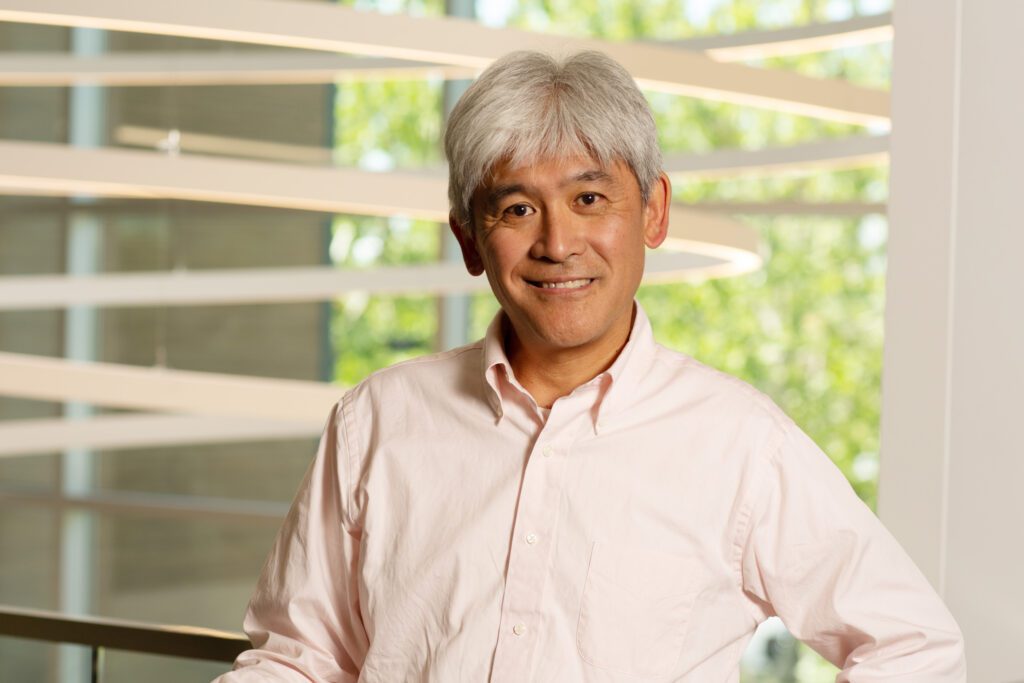
“Quantum has been talked about for over a couple decades already. I think now, we have good timing; much of the technological maturity is coming up,” Kazu Gomi, President and CEO of NTT Research Inc. told Contxto.
“We’re not there yet, but compared to 20 or 30 years ago- when everything was pretty much theory- now we are fine-tuning the theoretical understanding for more practical applications. This is a time where we are putting our forces together to make it happen,” he added.
Back to physics: it’s about combining forces
As this innovation surge sweeps through the market, more groundbreakers have increasingly sought alternate ways through which qubits- quantum computing’s bits which can exist in superposition- can be physically implemented.
According to a 2024 paper by the Social Science Research Network (SSRN), six different implementations of qubits have been proposed and are currently under development: superconducting; topological; spin; ion trap; diamond nitrogen-vacancy (NV) centers; and photonic.
In this, superconducting qubits remain the most developed, and are based on circuits that operate at low temperatures, where electrical resistance disappears and quantum becomes the dominant force. Google, for one, has turned to this technology for its landmark Sycamore processor.
Topological, spin, ion trap and NV centers methodologies remain limited because, regardless of theoretical advantages, most still await experimental validation, offer limited capacity, face scalability problems, or deepen negative environmental impacts.
Photonic qubits, however, use the properties of light to encode quantum information. Their advantage lies in being immune to many types of noise, and being able to travel long distances without compromising on data transmission quality.
In fact, light-based quantum computers would operate at normal room temperature and pressure, consume significantly less energy, and not require external devices for operation, according to NTT.
This transformation extends beyond the private sector. The Japanese government, for one, also named 2025 as the year of quantum industrialization, injecting $335 million USD into its domestic quantum industry.
Others like Spain, the U.S., and India have placed their own bets, including a €808 million investment, the American introduction of the Quantum Leadership Act, and the 2026 anticipated launch of a “Quantum Valley” technology park in the eastern Indian city of Amaravati.
Why does quantum matter for AI?
The stakes are high for tech giants. But, for regular users who will not need a device capable of optimizing logistics problems, discover new drugs or complete complex resource reallocations, the stakes might be even higher.
“AI has made us reach the limits of power consumption,” said Akira Shimada, President at NTT, during a press conference in November at the NTT R&D Forum in Tokyo.
“I’m sure you’re suing AI, one way or another. When you write a text, you let AI proofread it to make it shine, and so on. But, every time you ask ChatGPT to do this, so much energy is being consumed behind the scenes,” Gomi added.
“You’re not paying much to use ChatGPT. But at the end of the day, the price you actually pay is the environmental impact.”
The power needed to keep AI systems up and running in North America alone increased from 2,688 megawatts at the end of 2022 to 5,341 at the end of 2023, according to MIT. This amount of electricity is roughly equivalent to the total power capacity of countries like Uruguay.
“We can get rid of digital circuits, and then natural interactions between different lights can make the base for new AI computation. So, instead of a computer, we basically shine a light and then you can do the computation,” Gomi explained.
Combined, quantum and AI technologies will reshape business strategy and decision making capacities across industries. Quantum will allow AI to be leveraged in ways previously unimaginable, especially in the financial, healthcare and logistics sectors, according to a June 2025 SSRN study.
In finance, quantum’s superior processing capacities will revolutionize portfolio optimization, risk management, trade execution and fraud detection; in healthcare, quantum-AI has already accelerated drug discovery processes due to its efficacy in modeling molecular behavior; logistics will see an optimization of supply chain operations that outperform traditional methods.
This symbiosis is not futuristic. AI and quantum technologies are converging fast, which has allowed for the speeding up of innovation; quantum has a growth rate of 1.07, AI of 1.37, but 1.58 combined, as per another 2024 report.
Quantum in Latin America
Since 2023, IBM has released its annual Quantum Readiness Index, which highlights organizations and regions around the world which will be able to capture value from quantum capabilities- and the ones set to be left in the dust.
While the report’s December 2025 version highlights that quantum computing is on the “cusp of advantage”- on the verge of running computation accurately, cheaply and efficiently- the effects will be experienced differently across industries, use cases, and nations.
Although sectors like finance, power, logistics and health are poised to be the most benefited by quantum computing in Latin America, stakeholders must start acting now, IBM Quantum Head Alexandre Pfeifer told Bloomberg Linea.
“To delay adoption has a cost: time is lost in launching quantum computing-powered applications, time is lost in developing internal capabilities, and talent is lost as skilled professionals may migrate to regions and organizations already investing in this technology,” Pfeifer said.
Quantum technology poses key implications for the developing nations of Latin America especially.
According to scholars, agriculture in the region could be highly improved through the technology, as climatic variables and geological conditions could be measured with more precision- eliminating some risks, reducing farmers’ reliance on fertilizers, and improving crop management.
Latin American companies like Brazilian Itaú and Bradesco, Argentine-born Globant and Mexico’s Tecnológico de Monterrey are all part of IBM’s Quantum Network, which seeks to gather stakeholders in hubs of research excellence and capability building.
Other organizations, including the Development Bank of Latin America and the Caribbean (CAF), the Inter-American Development Bank (IDB), Cisco and Finastra have joined forces with NTT to promote digital inclusion and connectivity, and technological entrepreneurship in the region.
Meanwhile, events like the Quantum AI Summit Peru 2025– taking place from December 19 to 21- are advocating for the establishment of a “quantum roadmap” that can guide public and private sectors while they thrive in this new technological shift.
At the government level, Chile declared in September 2024 that it would add becoming the regional leader in the quantum revolution to its national agenda. The country developed a guiding document in consultation with experts, and has invested over $20 billion Chilean pesos ($21.55 million USD) into more than 300 quantum research projects.
Colombia, on the other hand, established a $4.5 million USD fund for quantum and AI projects which focus on environmental, social and economic development in April 2025.
A region trailing behind
Despite the promise, challenges remain. Latin Americans must overcome financing and infrastructure limitations, educate their workforce and retain talent, solve ethical and legal questions emerging from the technology’s implementation, and encourage entrepreneurship and commercialization.
As signaled by researchers Boris Saavedra and Heriberto Acosta from the Center for Hemispheric Defense Studies, quantum technology’s hardware, as it stands today, requires costly investments. In countries like Colombia, Honduras, and Venezuela, where less than 0.7% of GDP is destined to R&D, investment is unlikely to be sufficient.
The technology also requires highly educated and skilled human talent in mechanics, physics and advanced mathematics. As the “brain drain” remains persistent- prompting governments to offer scholarships to retain talent- whether the region will be able to sustain these advancements is uncertain.
Legal infrastructures must also act proactively to avoid data privacy and surveillance concerns. “The possibility of decrypting old data heightens concerns about a ‘store now, decrypt later’ scenario,” the researchers note.
And, while some Latin American countries have rigorous data protection laws, others have underdeveloped cybersecurity frameworks- including Bolivia and Guatemala. For this, multilateral institutions like the IDB could step in to promote safeguards.
Finally, although Latin American studies into quantum computation and AI abound, governments must also implement effective channels to transform academic findings into tangible market success stories.
Deep-tech startups demand long-term investment returns, although regional venture capital trends focus on sectors with more immediate profitability. This long-term vision and strategic planning might just be the missing puzzle piece to make Latin America’s leap into quantum successful.
What now?
While organizational readiness has advanced in recent years, stakeholders face inadequate quantum skills, immature technology, unclear use case timelines, and expensive hardware, as per IBM.
Like the rest of the world, then, Latin America now has a unique opportunity to upskill their workforces in computational proficiencies, invest in their entrepreneurs and scholars, foster cultures of collaboration with global quantum companies, and develop interdisciplinary programs to prepare for the upcoming quantum leap.
The question is no longer whether the quantum revolution will arrive, but who will be ready when it does.
Add a comment


