
Por Ana Herazo
February 27, 2026
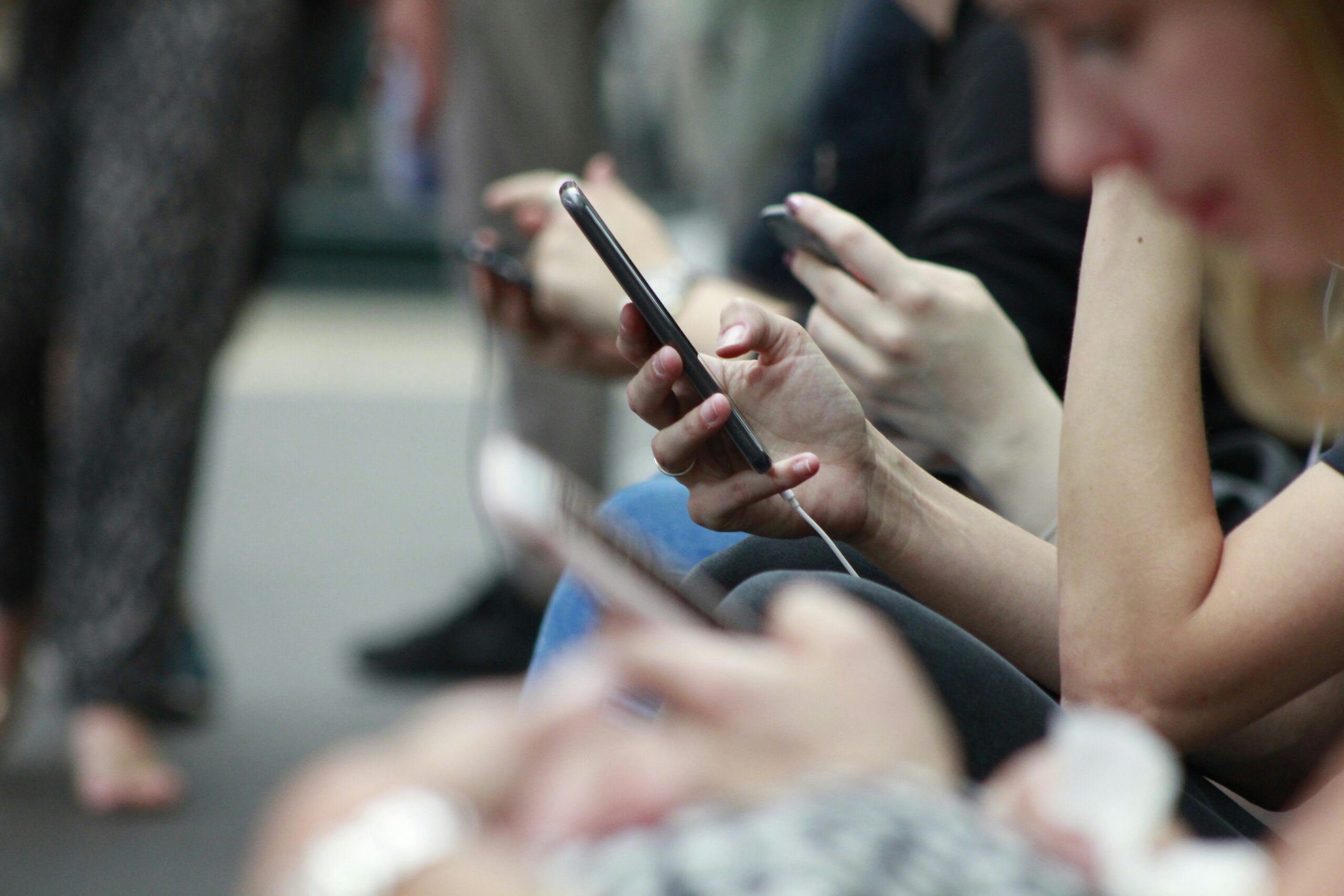
As you read this, your phone has probably rung at least once. Perhaps you have already checked it.
Did you know that just by checking that message and coming back, it takes your brain about 23 minutes and 15 seconds to regain its previous level of concentration?
This is demonstrated by a study by Gloria Mark, a professor at the University of California, which quantifies one of the most silent and costly phenomena of our time: the economics of distraction.
The economy of distraction, a concept attributed to Nobel Prize-winning economist Herbert Simon, is based on capturing attention. As the economist warned in 1971: “The abundance of information generates poverty of attention.” More than 50 years later, his prediction has come true: attention has become an extremely scarce resource.
Through a simple but effective mechanism, technology platforms monetize this resource. Every infinite scroll, every push notification, and every algorithm that “recommends” content is designed to maximize time spent within the application. As the documentary The Social Dilemma argues, we are not the customers of these platforms: we are the product.
The average user spends more than six hours a day in front of screens. In Latin America, Brazil leads the region with five hours on cell phones alone. Colombia, for its part, ranks third globally in terms of the percentage of the day spent on social media, with 24% of time consumed on screens.
In behavioral economics, there is the principle of friction: adding an extra step between impulse and action dramatically reduces the likelihood of giving in. Applied to digital distractions, this suggests that the greatest value lies not in creating more software, but in removing the solution from the very device that creates the problem.
Damián Duque and Nicolás Velasco are the founders of Recobra, a Colombian startup that developed a physical NFC card as a mechanism for unlocking applications. “We wanted the decision made in a moment of clarity to be maintained over time, even when moments of weakness arose,” he explains in an interview with Contxto.
Without the card, there is no way to bypass the lock from the screen. “The physical creates friction that the digital cannot replicate. The barrier leaves the cell phone, where the addiction occurs, and moves to a tangible object,” they point out. The proposal may seem counterintuitive, but in some cases, the most disruptive innovation is a simple object that forces you to make a conscious decision before opening TikTok.
Blocking distractions solves only part of the challenge. The other part is how to use the time that is recovered.
Ironically, the global wellness movement has often been driven by the very social networks it seeks to counteract, but in Latin America it takes on its own forms: from gyms and yoga studios that promote digital disconnection to educational programs that teach time management and autonomy to teenagers.
The ecosystem against the attention economy is not limited to productivity apps. It includes services that help intentionally fill the spaces left by screens.
In a region where many startups compete to increase engagement, those that are committed to reducing it represent a form of counter-hegemonic entrepreneurship. They are not fighting to capture attention, but to give it back.
The attention economy is, in essence, a design problem. Combating it requires an equally sophisticated counter-design. Latin America, with its high digital penetration, young population, and expanding entrepreneurial ecosystem, is in a position to lead this conversation.
More and more entrepreneurs are no longer asking themselves how to capture the user’s attention, but something deeper and potentially more profitable in the long term: how to help them regain it.
Because in the distraction economy, the most valuable resource is not data or information. It is time. And reclaiming it may be one of the most revolutionary acts of the 21st century.
Although it is often interpreted as a problem of individual willpower, the attention economy is the result of deliberate design. Companies like Meta employ teams of psychologists and behavioral scientists dedicated to triggering rapid dopamine cycles, which have been compared for years to addiction mechanisms.
Unlike other addictions, social media does not come with health warnings. Cigarettes display explicit messages; alcohol has age restrictions; casinos have self-exclusion mechanisms. These barriers exist so that a decision made in a moment of clarity is maintained in contexts of less self-control.
In the digital environment, these barriers are almost non-existent. Tools such as Apple Screen Time or Google Digital Wellbeing can be disabled in seconds. Standalone apps require just a few clicks and a short wait. Although they offer the illusion of control, they are insufficient.
Breaking the cycle is especially difficult because leaving social media comes with a real social cost. Leaving Instagram means missing out on invitations, cultural codes, and everyday conversations. More than an addiction, it is a social infrastructure that few want to be left out of.


Por Contxto
May 31, 2024

Por Contxto
May 23, 2024

Por Contxto
May 15, 2024