
Por Stiven Cartagena
January 28, 2026
In an effort to promote financial inclusion and digital banking in the Salvadoran economy, Bancoagrícola has partnered with Accion and the Mastercard Center for Inclusive Growth. The initiative also seeks to use remittances, which account for a quarter of the country’s gross domestic product, as an entry point to integrate low-income populations into the formal financial system through the Nequi digital payment platform.
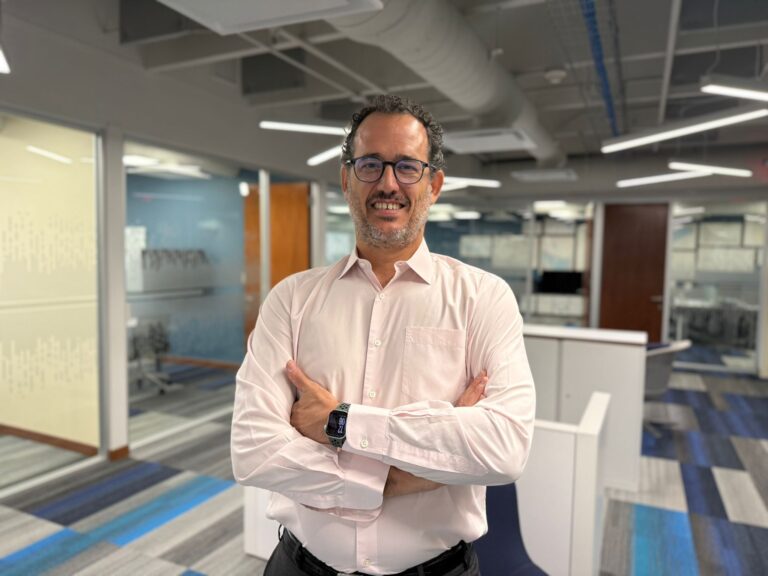
According to Carlos Perafán, Vice President and Regional Manager for Latin America at Accion Advisory, digitizing remittances “can help transform one of the most reliable and recurring financial flows in Latin America into a gateway to inclusion.” As part of the work with Bancoagrícola and Nequi, “we seek to integrate users into a digital ecosystem and, in doing so, create a foundation of trust and visibility.”
The collaboration focuses on turning Colombian fintech Nequi into more than just a digital wallet. The plan is to develop an ecosystem where users can not only receive money from abroad, but also manage everyday payments, such as school fees or purchases at local businesses. At the same time, alternative credit assessment models based on transaction data will be created, targeting people who are currently invisible to traditional banks.
For microentrepreneurs, this opens up concrete opportunities. Perafán explains that digital remittances can “unlock a set of opportunities that simply do not exist in cash-based systems,” allowing them to pay suppliers, accept digital payments, and participate in local e-commerce. Overall, “we seek to transform them into productive financial assets for microentrepreneurs.”
Although more than 87% of adults own a mobile phone, 70% of daily transactions are made in cash. Each month, around 440,000 people, mostly young people and small business owners, receive remittances through Bancoagrícola, but most withdraw the money in cash immediately, leaving no digital trace and without accessing other financial services.
“Money sent from abroad allows people to build a house or pay for education, but when it arrives in cash, it becomes invisible to the system,” explained Alejandro Amorin, Digital Payments Manager at Accion. “Digitizing it means that families can start building a history that opens doors for them, such as credit for a business,” he added.
Remittances to El Salvador, 90% of which come from the United States, increased by 16% year-on-year in the first five months of 2025. For a country where these remittances are the largest source of income, capturing a fraction of this flow within the formal system represents a transformative opportunity.
For Juan Manuel Rogel, head of Nequi in El Salvador, a change in behavior is already evident. “People are starting to use the platform not only to receive money, but also to pay for services and make digital purchases. It’s the first step in building a financial identity,” he said.
The alliance represents a new chapter in an eight-year collaboration between Accion and Mastercard, which seeks to expand access to the digital economy for millions of people.
Based on experience, Perafán points out that the strongest markets for replicating this model are those where remittances represent a high proportion of GDP. “Countries such as El Salvador, Guatemala, Honduras, the Dominican Republic, and parts of Mexico stand out,” he says.
Scaling the impact requires layered partnerships, working with local financial institutions, fintechs, and global networks. Recently, the fund also announced a partnership in Mexico, similar to the model it will apply in El Salvador. Accion will work with Fincomun to develop digital working capital credit through the analysis of alternative data.
“With Fincomun in Mexico, we are exploring opportunities to leverage alternative data from other sources, such as consumer goods suppliers like Bimbo, to digitize credit offerings,” concludes Perafán.


Por Israel Pantaleón
January 20, 2026

Por Israel Pantaleón
December 17, 2025

Por Israel Pantaleón
November 21, 2025