
Por Stiven Cartagena
July 29, 2026
Investing in startups in Latin America is no longer just a matter of copying and pasting Silicon Valley formulas. Today, regional venture capital operates by its own rules, with fewer vanity metrics and a greater focus on solving structural problems through the effective use of capital.
Given this landscape, the key to success lies not only in having a finished product, but also in the strength and communication skills of the founding teams—their ability to convey their vision with passion and navigate years of uncertainty, strategic pivots, and learning. Likewise, opportunities are emerging in the region in sectors such as climatech, food security, and green economies, in addition to established verticals like healthtech, fintech, manufacturing, and B2B software solutions.
Currently, more than 1,200 active startups in the region dedicated to climate change mitigation and adaptation have been identified, according to data from Crunchbase.
The emergence of artificial intelligence has been both a challenge and a catalyst for entrepreneurs and investors, transforming traditional growth metrics. On the one hand, it allows founders to operate with small, highly efficient teams to generate greater profitability per employee and do more with less. On the other hand, it challenges investment funds to reevaluate companies' competitive advantage, moving away from the model of raising multimillion-dollar funding rounds focused on rapid spending to prioritize speed of execution, crisis resilience, and business sustainability.
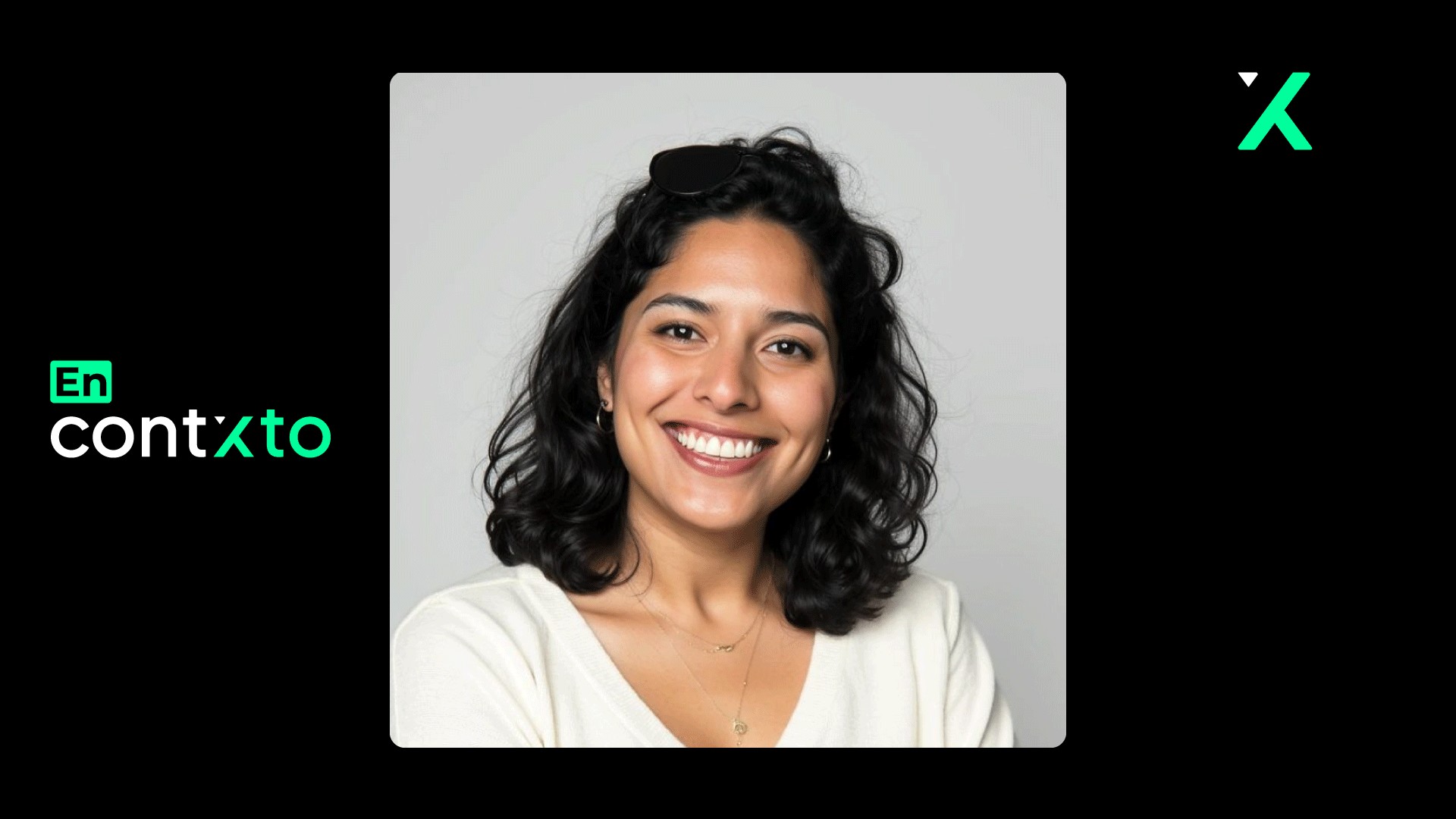
To analyze these dynamics, En Contxto spoke with Damaris Mendoza, a partner at 500 Global, one of the most active early-stage venture capital firms internationally. With extensive experience in investor relations, business development, and community management, Damaris explains how they connect portfolio startups with major corporate players, details the key factors for evaluating entrepreneurial talent, and shares the fundamentals of the fund's current call for proposals, which offers a $300,000 investment, personalized support, and an immersion program in Silicon Valley.
Contxto: Throughout your time at the fund and within the communities, you've seen hundreds of startups. What sets an exceptional founder apart in the first few minutes of a meeting?
Damaris: There's one element that tends to be underestimated: the ability to communicate. When an entrepreneur—whether through a short video on the app, an initial conversation, or an elevator pitch—conveys their message clearly, effectively, and concisely, with passion in their eyes and contagious energy, they spark much more interest than an extremely polished project that lacks spark. During initial and final interviews, as well as throughout the due diligence process, we seek to assess whether the team has the capability and resilience to navigate the long and difficult journey of entrepreneurship—with its pivots, delays, successes, failures, and the rapid changes required to become a success story. Becoming a success story—whether that means profitability, an IPO, or unicorn status—requires a lot of blood, sweat, and tears, so you have to make sure you're investing in the right people.
Contxto: Speaking of those efforts, there are founders who don't make it. What do you think is one of the main mistakes or reasons why they fall by the wayside these days?
Damaris: Contrary to popular belief, a lack of funding isn't the most common reason an entrepreneur gives up. When there's motivation, clarity, and the right drive, entrepreneurs find a way. Venture capital is a very specific type of funding designed to turn one dollar into 100 dollars by hitting the gas. The real reason for giving up is usually emotional exhaustion ("I've already tried everything"), a lack of motivation, and a poorly grounded culture. Culture is about feeling that the team is rowing toward the same goal to solve a big problem; if this fails, it can destroy even teams that have been working together for 12 years. The main mistake is assuming that just because something worked once, it will always work the same way, or that there are no more lessons to learn—thereby losing sight of the fundamentals of the business.
Contxto: What carries more weight today when evaluating an investment: the business or the person? A great product or a great team?
Damaris: A great team, 100%. Obviously, you have to make sure someone is willing to pay for the product, but if you have a dedicated, committed teamthat's ready to pivot, you'll eventually arrive at the right product. On the other hand, if you have a "magic" product (like a cure for cancer) but lack the team with the execution skills, partnerships, and daily drive to bring it to market and sell it, it's useless.
Contxto: Artificial Intelligence has allowed many founders to operate without needing large teams. From a fund's perspective, does this make it easier to invest or harder to identify top talent?
Damaris: In investments made over the past year using AI, we've observed that teams remain small and generalist, focusing intensely on optimizing specific processes. Today, in 2026, when tokens are relatively cheap, resources are used much more efficiently, keeping headcount low and generating incremental revenue per employee—though this has its limits. We mustn't get "carried away" by Silicon Valley clichés or assume that we have to replicate to the letter glamorous funding rounds of hundreds of millions of dollars that burn through just as quickly. The industry is undergoing a profound transformation, redefining its long-standing criteria, and today, hyper-talented founders with strong fundamentals and sustainable products (especially in software) who continue to raise capital are highly valued.
Contxto: Where does a startup's true competitive advantage lie in today's environment?
Damaris: In doing more with less by using all the tools at our disposal—including AI—and in having the acumen to identify areas of opportunity that incumbents leave behind during times of uncertainty or crisis (as has happened during recent elections in Colombia and Peru). While incumbents pull back, startups can capitalize on the first-mover advantage. Since statistically less than 1% of the companies backed by the industry make it to the top, the competitive advantage lies in being the fastest to find those opportunities and being hyper-optimized to do much more with less.
Contxto: Do you think Latin America's next unicorns will come from very small teams?
Damaris: Yes, it's entirely possible that we'll see the region's first unicorn built by a relatively small team; it's not far-fetched.
Contxto: If you were founding a startup in the region today, which sector would you choose?
Damaris: There's a massive opportunity in climate tech, food security, and green industries or economies. This is due both to the effects of the El Niño phenomenon over the next 5 or 6 years and to the fact that corporations are seeking agile ways to mitigate their environmental impact or make the transition. Food security is key ("we can have all the Bitcoin you want, but if we don't have anything to eat in 25 years, we're in trouble"). Latin America is characterized by first-rate competitive advantages in agriculture, food, and opportunities for energy transition and climate action, which will represent a very interesting opportunity over the next 2 or 3 years. That said, it requires founders with a solid scientific, technological, or academic background.
Contxto: What other sectors or verticals does 500 Global see as having strong potential in the region?
Damaris: We continue to make frequent investments in Health (a sector we really like), Fintech (where things have gone incredibly well), B2B SaaS, and projects with vertical integration in manufacturing. Latin America faces many challenges, so any complex problem that can be optimized with a solid technological backbone to achieve scale more quickly and at a lower cost is welcome.
Contxto: 500 Global is currently accepting applications from startups in the region. What does the investment proposal entail, and what do entrepreneurs need to qualify?
Damaris: As an early-stage fund in Latin America, the current proposal consists of a $300,000 investment in exchange for a 10% equity stake. Five companies will be selected to receive a customized, one-on-one mentorship program. Each company is assigned a dedicated member of the 500 team to set weekly goals to be met over a period of 8 months to 1 year. Additionally, as a fund founded in the Bay Area, twice a year, they bring about 40 to 45 founders from the portfolio to live in Silicon Valley for 21 days to immerse themselves in the sense of urgency and agility, connecting with mentors, investors, and a network of more than 550 founders in Latin America.
Contxto: What is the deadline to apply, and where can you do so?
Damaris: The deadline to apply is midnight on July 31 (there will be no other call for applications this year) via aplica.500latam.co. On the site, you'll find the terms and conditions, dates, investment document, and questionnaire. You must attach a presentation video no longer than 2 minutes.
Contxto: You also mentioned a tour of hackathons and events in the region. In which cities and on what dates will you be there?
Damaris: During the month of August, they will be in 4 countries and 6 cities: Mexico City, Querétaro, Santiago, Chile, Buenos Aires, Medellín, and Bogotá. They will hold "Release Before Ready" events on August 15, 22, and 29. All information and registration details are available at releasebeforeready.com.

Por Stiven Cartagena
March 31, 2026

Por Stiven Cartagena
March 18, 2026



