
Por Contxto
September 21, 2026
Artificial intelligence is moving from an experimental tool to becoming part of retail operations. Personalization, pricing, inventory, promotions, customer service, and logistics are some of the areas where retailers are testing how to incorporate models capable of processing large volumes of information and automating decisions.
The next challenge is less obvious: making these technologies work in an integrated way within businesses that already depend on multiple systems, channels, and processes.
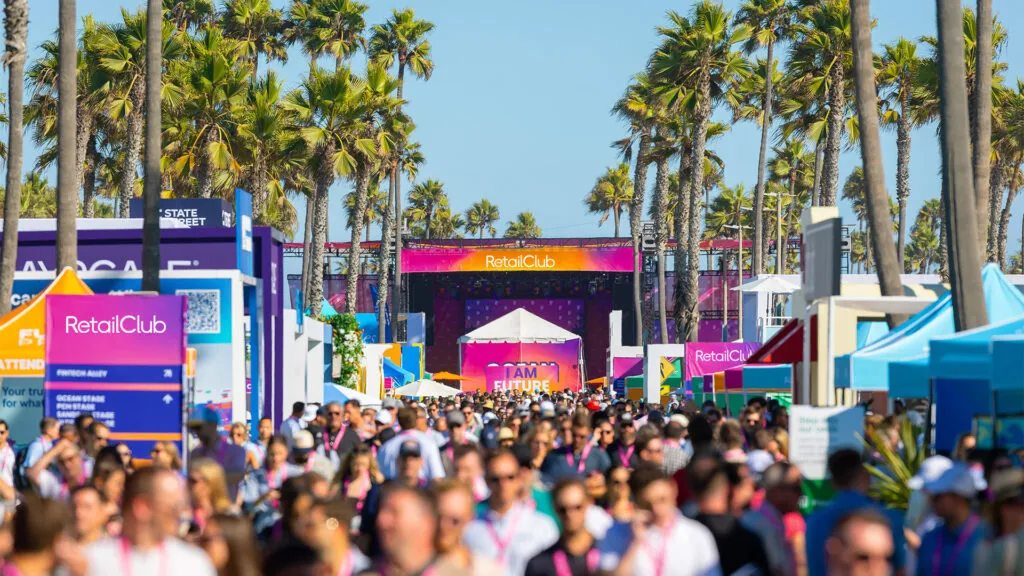
That transition is one of the issues shaping the retail sector in the US this week. From September 22 to 24, more than 2,000 retail, brand, technology, startup, and investment leaders are gathering in Huntington Beach, California, for the RetailClub AI Festival, an event created by the founders of Shoptalk and Groceryshop around the impact of artificial intelligence on the industry.
The event features more than 150 speakers and is organized around an idea that reflects the current state of the market: AI can no longer be treated as an isolated category within a retailer's technology strategy.
Interest in AI across retail is growing as the technology begins to touch virtually every layer of the business. Companies are exploring everything from recommendation and personalization systems to tools for optimizing pricing, promotions, inventory, and supply chains.
RetailClub has structured its agenda around that breadth. Festival sessions examine how AI is changing the business, team structures, and relationships with consumers, while also featuring demonstrations of real-world implementations and prototypes.
One of the central discussions is what happens after a proof of concept.
A retailer may demonstrate that a model works in a controlled environment, but bringing it into production means connecting it to the data, platforms, and processes that support an operation that cannot stop. It also requires defining who makes decisions, how systems are supervised, and what happens when an automated recommendation affects variables such as pricing, inventory, or the customer experience.
That is why the conversation around AI is shifting from experimentation toward execution.
RetailClub's format itself reflects that shift. In addition to the main presentations, the event includes technology demonstrations, workshops, and discussion groups focused on specific use cases. Its Breakthru program also seeks to connect executives and operators to discuss specific implementation challenges.
Among the technology companies participating in the festival is Nisum, which is using the event to address precisely one of the problems that emerges when retailers try to move from experimentation to implementation.
The company, which has more than 25 years of experience working with retail and Fortune 500 companies, is participating as an event sponsor and has a presence at booth 312, next to the PCH Stage.
Nisum is also hosting two Breakthru Experiences sessions led by Sajid Mohamedy, a member of its board of directors, under the title "From Pilot to P&L: An Unfiltered Guide for Retail Technology Leaders."
The discussion aims to address why some AI pilots never make it into production and what differentiates initiatives that manage to remain within a company's budgets and operations. The sessions are scheduled for September 23 and 24.
Nisum's focus covers four areas: customer growth and personalization; AI-driven margin growth; unified and agent-ready commerce; and data and AI for retail performance.
In practice, these areas reflect the evolution of the conversation within the industry. AI can already recommend products, analyze behavior, support inventory decisions, or automate certain interactions. The challenge is connecting those capabilities to the systems that allow a retailer to turn those decisions into results.
The RetailClub AI Festival is taking place at a time when retail is moving beyond the first stage of experimentation with artificial intelligence.
The question is no longer simply what the technology can do, but where it should be incorporated, what data it should use, what rules should govern it, and how it can generate measurable results for the business.
That shift also explains why technology providers are moving the discussion toward infrastructure, data, platforms, and processes. AI can accelerate certain functions, but its impact depends on having an operation capable of absorbing it.
The festival ends on September 24, but the discussion running through its three days points to a shift that will likely continue long after the event: the future of AI in retail will depend less on how many pilots a company can run and more on how many it can turn into part of its operations.

Por Contxto
June 10, 2024

Por Contxto
May 15, 2024
Por Contxto
April 19, 2024
Por Contxto
March 11, 2024